
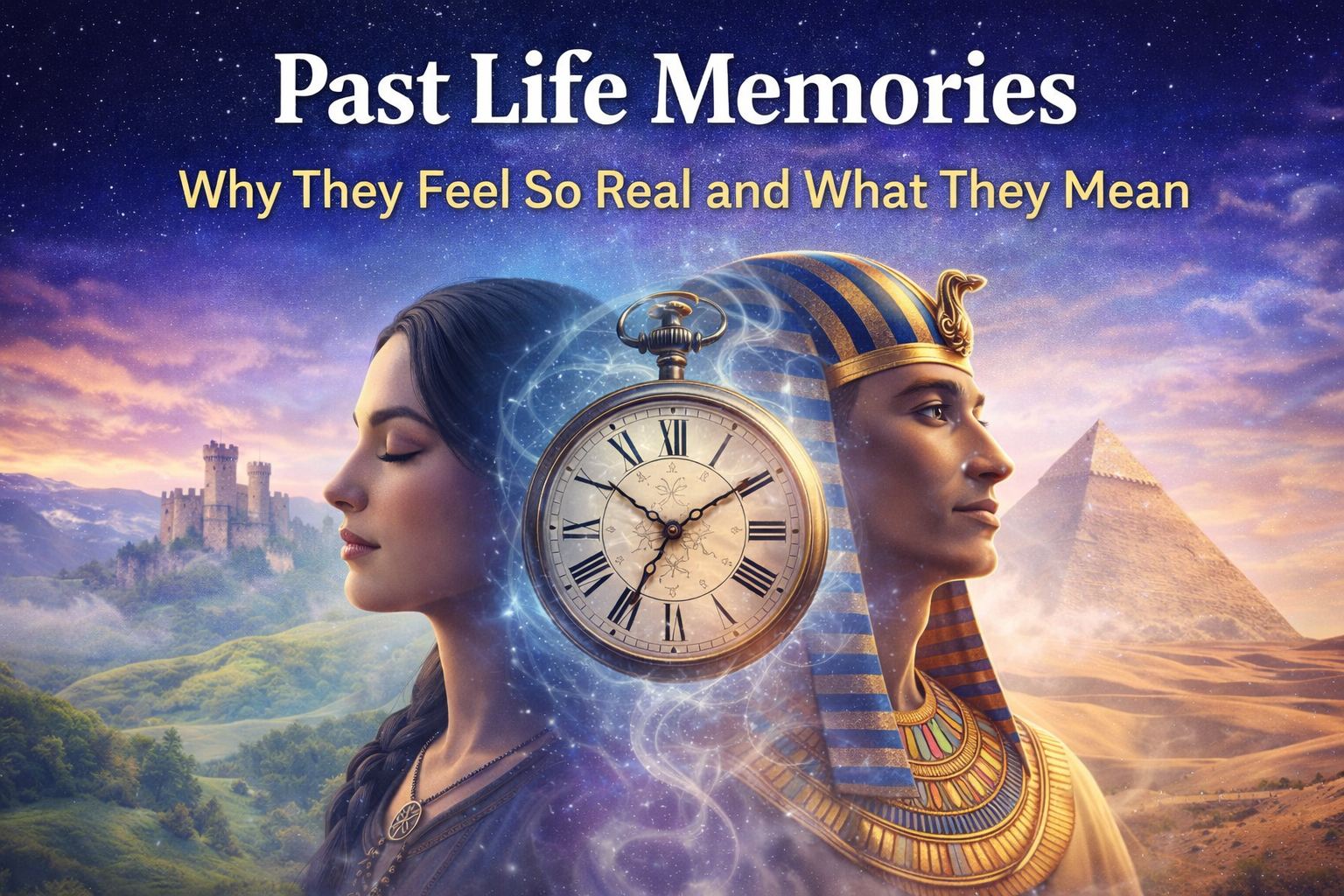
Many people experience memories that don’t seem to belong to their current life. These moments can appear as vivid dreams, emotional reactions, unexplained fears, or a deep sense of familiarity with places and people they have never encountered before. These experiences are often described as past life memories.
While mainstream science continues to explore how memory and consciousness work, spiritual traditions, psychology, and modern case studies suggest that past life memories may carry deeper meaning. In this article, we’ll explore why past life memories feel so real, how they appear, and what they may reveal about your soul’s journey.
What Are Past Life Memories?
Past life memories are impressions, emotions, images, or sensations that seem to originate from a time before your current lifetime. Unlike imagination, these memories often feel unexpected, emotionally intense, and highly detailed.
They may surface as:
- Sudden mental images
- Strong emotional reactions without a clear cause
- Recurring dreams of another era
- Unexplained skills, fears, or preferences
- A sense of “knowing” something you never learned
Many people report these memories during meditation, dreams, or moments of emotional vulnerability.
Why Do Past Life Memories Feel So Real?
One of the most common questions people ask is why these memories feel more vivid than normal thoughts or dreams. There are several possible explanations.
Emotional Memory Is Stronger Than Logical Memory
Emotions are stored deeply in the subconscious mind. If a memory is tied to fear, love, loss, or trauma, it can feel extremely real—even if the conscious mind doesn’t recognize its origin.
The Subconscious Mind Doesn’t Track Time
Your subconscious mind doesn’t distinguish between “past” and “present” the way your logical mind does. When a memory resurfaces, it may feel like it’s happening now.
Sensory Details Increase Realism
Many past life memories include sensory details such as:
- Sounds
- Smells
- Clothing textures
- Landscapes or architecture
These details give the experience a strong sense of realism, making it difficult to dismiss as imagination.
Common Signs of Past Life Memories
Not everyone experiences past life memories the same way. Below are some of the most common signs.
Recurring Dreams of Another Time
Dreams set in unfamiliar historical periods, foreign locations, or involving unknown people may be a sign of soul memory resurfacing.
Unexplained Emotional Triggers
Sudden fear, sadness, or comfort in specific situations without a logical cause can point to unresolved past experiences.
Instant Familiarity With Places or Cultures
Feeling “at home” in a country you’ve never visited or deeply connected to a culture you were never raised in is a widely reported sign.
Natural Talents Without Training
Some people display strong skills such as music, languages, or craftsmanship without formal learning.
Are Past Life Memories Scientifically Explained?
From a scientific perspective, past life memories are often explained through psychology and neuroscience. Possible interpretations include:
- Subconscious imagination
- Cryptomnesia (forgotten information resurfacing)
- Emotional pattern recognition
- Symbolic memory processing
However, research into childhood past life recall—especially cases studied by psychiatrists—has shown instances where children recalled verifiable historical details they were unlikely to have learned naturally.
Science may not fully explain past life memories yet, but it does acknowledge that human memory and consciousness are not fully understood.
Spiritual Meaning of Past Life Memories
From a spiritual perspective, past life memories are believed to surface for a reason. They may appear to help you:
Heal Unresolved Karma
Memories connected to trauma or emotional pain may surface to be acknowledged and released.
Understand Repeating Life Patterns
Recurring relationship challenges or fears may originate from lessons carried over from another lifetime.
Reconnect With Soul Purpose
Memories of skills, callings, or roles from another life may guide your current life direction.
Can Past Life Memories Affect This Lifetime?
Yes, many spiritual traditions believe past life memories influence current experiences, including:
- Relationship dynamics
- Emotional patterns
- Career choices
- Fears and phobias
- Core beliefs about self-worth
Recognizing these influences can lead to greater self-awareness and emotional healing.
How to Safely Explore Past Life Memories
If you’re curious about exploring past life memories, it’s important to approach the process gently.
Meditation and Reflection
Quiet meditation can allow subconscious memories to surface naturally without force.
Journaling Experiences
Writing down dreams, emotions, or sudden insights helps identify patterns over time.
Guided Past Life Readings
Many people begin with gentle, reflective readings designed to explore symbolic soul patterns rather than literal events.
You can explore this topic further through our free past life reading, designed to help you reflect on recurring soul themes and emotional patterns.
Should You Trust Past Life Memories?
It’s healthy to remain open yet grounded. Past life memories don’t need to be taken literally to be meaningful. Whether symbolic or experiential, what matters most is how they help you grow, heal, and understand yourself better.
Instead of asking, “Is this memory real?”, a more helpful question is:
“What is this experience trying to teach me?”
Final Thoughts
Past life memories feel real because they touch deep layers of emotion, identity, and subconscious awareness. Whether viewed through a spiritual or psychological lens, these memories often surface to guide healing, understanding, and personal growth.
By observing them with curiosity rather than fear, you can uncover powerful insights about who you are—and why certain patterns repeat in your life.

Michael Smith is a spiritual content writer and independent researcher who explores topics such as past life studies, reincarnation, karma, dream symbolism, and spiritual self-discovery. His work focuses on presenting ancient beliefs, metaphysical concepts, and modern interpretations in a clear, balanced, and reader-friendly way.
With a strong interest in spiritual psychology and comparative belief systems, Michael creates informative articles designed to help readers reflect, learn, and form their own understanding. He emphasizes clarity, transparency, and responsible discussion of spiritual topics, aligning his content with Google’s EEAT (Experience, Expertise, Authoritativeness, and Trustworthiness) and Helpful Content guidelines.
Michael’s articles are written for educational and informational purposes, drawing from historical references, cultural traditions, and widely discussed spiritual theories. He avoids exaggerated claims and encourages readers to approach spiritual exploration with curiosity, mindfulness, and personal discernment.
When not writing, Michael continues researching spiritual traditions, symbolism, and consciousness studies to deliver thoughtful, high-quality content that supports meaningful learning and self-reflection.
About The Author