Past Life Oracle - Discover Your Previous Existence

✨ Past Life Oracle ✨

Unveil the mysteries of your previous existence

Your Past Life Revealed

Author: Michael Smith

  • 7 Signs You’re in a Karmic Relationship (And Why It Feels Intense)

    7 Signs You’re in a Karmic Relationship (And Why It Feels Intense)

    Some relationships feel different from the very beginning. The connection is immediate, powerful, and almost overwhelming. You may feel like you’ve known the person forever — even if you just met. At the same time, the relationship can be emotionally intense, complicated, and difficult to navigate.

    Many spiritual traditions describe these experiences as karmic relationships. Understanding the karmic relationships signs can help you determine whether your connection is part of a deeper soul lesson — and what it means for your growth.


    What Is a Karmic Relationship?

    A karmic relationship is believed to be a connection between two souls who share unresolved energy from past experiences — possibly even past lives. These relationships are not random. They are said to exist to teach important lessons about love, boundaries, responsibility, or self-worth.

    Unlike stable, long term partnerships built on harmony, karmic relationships are often intense and transformative. Their purpose is growth — not comfort.


    Why Do Karmic Relationships Feel So Intense?

    The intensity comes from unfinished emotional energy. When two people reconnect with unresolved patterns, it can trigger powerful emotions such as:

    • Obsession
    • Deep attachment
    • Fear of loss
    • Jealousy
    • Emotional highs and lows

    This intensity isn’t necessarily toxic but it does feel overwhelming because it pushes you to confront parts of yourself you may have avoided.


    7 Clear Karmic Relationships Signs

    If you’re wondering whether you’re in a karmic relationship, here are the most common signs to look for.


    1. Instant, Magnetic Attraction

    One of the strongest karmic relationships signs is immediate chemistry. You may feel drawn to the person without logical explanation. The connection feels familiar, almost like reconnecting with someone you already know.

    This familiarity can create both comfort and urgency — as if something important must happen between you.


    2. Emotional Highs and Lows

    Karmic relationships rarely feel neutral. They often swing between intense closeness and emotional distance. Arguments may feel dramatic. Reconciliations may feel euphoric.

    This rollercoaster dynamic happens because unresolved emotional lessons are being activated.


    3. Repeating Conflicts

    If the same arguments keep resurfacing despite attempts to resolve them, it may signal a karmic lesson. The issue isn’t the surface problem — it’s the underlying pattern.

    Common repeating themes include:

    • Trust issues
    • Control struggles
    • Fear of abandonment
    • Power imbalance

    Until the lesson is understood, the conflict tends to repeat.


    4. Feeling “Addicted” to the Relationship

    Another common karmic relationships sign is difficulty letting go — even when the relationship is painful.

    You may know logically that it isn’t healthy, but emotionally you feel attached. This attachment often stems from unresolved energetic bonds rather than compatibility alone.


    5. The Relationship Triggers Deep Personal Growth

    Despite the challenges, karmic relationships often push you to grow rapidly. You may discover:

    • Hidden insecurities
    • Childhood wounds
    • Patterns of self-sabotage
    • Boundary issues

    Although uncomfortable, this growth is part of the relationship’s purpose.


    6. Strong Sense of Unfinished Business

    Even after separation, karmic partners may reappear unexpectedly. The connection can feel incomplete, as if something still needs closure.

    This lingering energy is one of the clearest karmic relationships signs — it suggests a lesson hasn’t fully integrated yet.


    7. The Relationship Changes You Permanently

    Whether it lasts months or years, a karmic relationship rarely leaves you unchanged. It shifts your understanding of love, yourself, and your emotional needs.

    Once the lesson is learned, you often feel stronger, wiser, and more self-aware.


    Karmic Relationship vs Soulmate: What’s the Difference?

    People often confuse karmic relationships with soulmates, but they serve different purposes.

    Karmic RelationshipSoulmate Relationship
    Intense and turbulentSupportive and balanced
    Focused on lessonsFocused on harmony
    Often temporaryOften long-term
    Emotionally triggeringEmotionally safe

    A karmic relationship teaches through challenge. A soulmate relationship grows through mutual stability.


    Are Karmic Relationships Always Romantic?

    No. Karmic relationships can also appear as:

    • Family members
    • Close friends
    • Business partners
    • Mentors

    Any relationship that triggers strong emotional patterns and deep personal lessons may carry karmic energy.


    How to Handle a Karmic Relationship

    If you recognize multiple karmic relationships signs in your situation, the goal is not to panic — it’s to gain awareness.

    1. Identify the Core Lesson

    Ask yourself:

    • What pattern keeps repeating?
    • What emotion feels strongest?
    • What is this relationship teaching me about myself?

    2. Set Healthy Boundaries

    Karmic growth does not require emotional suffering. Boundaries help break unhealthy cycles.

    3. Take Responsibility for Your Part

    Blame keeps karmic loops active. Ownership creates change.

    4. Release When the Lesson Is Complete

    Some karmic relationships end naturally once both individuals grow beyond the pattern.


    Can Karmic Relationships Become Healthy?

    Sometimes — but only if both individuals become conscious of the pattern. Without awareness, karmic dynamics continue repeating.

    Healing requires:

    • Emotional maturity
    • Honest communication
    • Willingness to grow

    If growth is one-sided, the relationship may not stabilize.


    Final Thoughts: Understanding Karmic Relationships Signs

    Karmic relationships are not punishments — they are catalysts. They reveal unresolved emotional patterns and push you toward deeper self-awareness.

    When you recognize the karmic relationships signs, you move from confusion to clarity. Instead of asking “Why is this happening to me?” you begin asking “What is this teaching me?”

    Growth is the ultimate purpose.

  • Karmic Lessons Explained: What Your Soul Is Here to Learn

    Karmic Lessons Explained: What Your Soul Is Here to Learn

    Every life carries purpose. Some challenges feel random, while others repeat until we finally understand them. According to spiritual philosophy, these repeating patterns aren’t accidents — they are karmic lessons. Understanding the karmic lessons meaning can help you make sense of emotional struggles, relationship cycles, and life obstacles that seem to follow you.

    This article explores what karmic lessons truly mean, how they show up in your life, and how you can consciously work with them for growth, healing, and soul evolution.


    What Is the Meaning of Karmic Lessons?

    The karmic lessons meaning comes from the concept of karma — the spiritual law of cause and effect. Karma is not punishment or reward. Instead, it reflects unfinished learning carried from past experiences, including past lives according to reincarnation beliefs.

    A karmic lesson is something your soul has chosen to learn, balance, or heal in this lifetime. These lessons often arise from:

    • Unresolved emotional patterns
    • Repeating life challenges
    • Relationship dynamics that feel intense or familiar
    • Inner struggles like fear, guilt, control, or self-worth

    Your soul uses real-life situations to present these lessons until they are consciously understood and integrated.


    Why Does the Soul Carry Karmic Lessons?

    From a spiritual perspective, the soul evolves across lifetimes. Each incarnation offers opportunities to grow through experience. When a lesson isn’t fully learned, it doesn’t disappear — it continues until awareness and change occur.

    Karmic lessons exist to:

    • Help the soul mature emotionally and spiritually
    • Balance past actions or intentions
    • Develop compassion, wisdom, and self-awareness
    • Break old cycles and limiting beliefs

    Rather than being burdens, karmic lessons are invitations for transformation.


    Common Signs You’re Experiencing a Karmic Lesson

    Many people live through karmic lessons without realizing it. Here are common signs your soul may be working through one:

    1. Repeating Life Patterns

    You may notice the same issues appearing in different forms — similar relationship conflicts, financial struggles, or emotional triggers.

    2. Intense Emotional Reactions

    Karmic lessons often bring strong emotions like fear, anger, attachment, or sadness. These reactions signal deeper soul-level work.

    3. Feeling “Stuck” Despite Effort

    You may feel like you’ve tried everything, yet the situation doesn’t change. This usually means the lesson hasn’t been fully understood yet.

    4. Instant Soul Connections

    Some people enter your life and immediately feel familiar. These are often karmic relationships designed to teach specific lessons.


    Types of Karmic Lessons the Soul Learns

    Each person carries unique lessons, but many karmic themes are universal.

    Lessons Around Self-Worth

    Learning to value yourself, set boundaries, and release approval-seeking behavior.

    Lessons of Forgiveness

    Letting go of resentment toward others — or yourself — to heal emotional wounds.

    Lessons of Responsibility

    Taking ownership of choices rather than blaming circumstances or others.

    Lessons of Love and Detachment

    Understanding unconditional love without dependency or control.

    Lessons of Trust

    Trusting life, intuition, and the timing of events rather than living in fear.


    Karmic Lessons vs Karma: What’s the Difference?

    While closely connected, karma and karmic lessons are not the same.

    • Karma is the energetic result of past actions and intentions.
    • Karmic lessons are the learning experiences created by that karma.

    In simple terms, karma creates the situation, and the karmic lesson is what you’re meant to understand from it.


    How Karmic Lessons Appear in Relationships

    Relationships are one of the most powerful mirrors for karmic learning. Romantic partners, family members, and close friends often trigger unresolved emotions.

    Karmic relationships may:

    • Feel intense or emotionally charged
    • Involve recurring conflicts
    • Push you toward growth through discomfort
    • End suddenly once the lesson is learned

    These connections are not meant to last forever — they are meant to teach.


    How to Work Through and Heal Karmic Lessons

    Understanding the karmic lessons meaning is only the first step. Healing requires awareness and conscious action.

    1. Identify the Pattern

    Ask yourself: What keeps repeating in my life? Look beyond surface details to emotional themes.

    2. Take Responsibility Without Guilt

    Acknowledge your role without self-blame. Responsibility empowers change.

    3. Practice Awareness

    Mindfulness, journaling, and meditation help you observe patterns rather than react automatically.

    4. Choose Different Responses

    Karmic cycles break when you respond differently than before.

    5. Practice Compassion

    Both for yourself and others. Compassion dissolves karmic resistance.


    Can Karmic Lessons Be Completed?

    Yes. Once a lesson is integrated, its emotional charge fades. The situation may resolve naturally, or it may no longer affect you the same way.

    Completion doesn’t mean perfection — it means awareness, growth, and inner balance.


    Are Karmic Lessons Linked to Past Lives?

    Many spiritual traditions believe karmic lessons originate in past lives. However, even without past-life belief, these lessons can be understood psychologically as inherited patterns and subconscious conditioning.

    Whether you view them spiritually or emotionally, karmic lessons point toward healing and evolution.


    Final Thoughts: Your Soul’s Curriculum

    Your life isn’t random. Every challenge carries meaning, and every obstacle offers wisdom. Understanding the karmic lessons meaning allows you to shift from feeling trapped by life to becoming an active participant in your soul’s journey.

    When you face challenges with awareness instead of resistance, karma transforms from burden into guidance — and your soul moves closer to freedom.

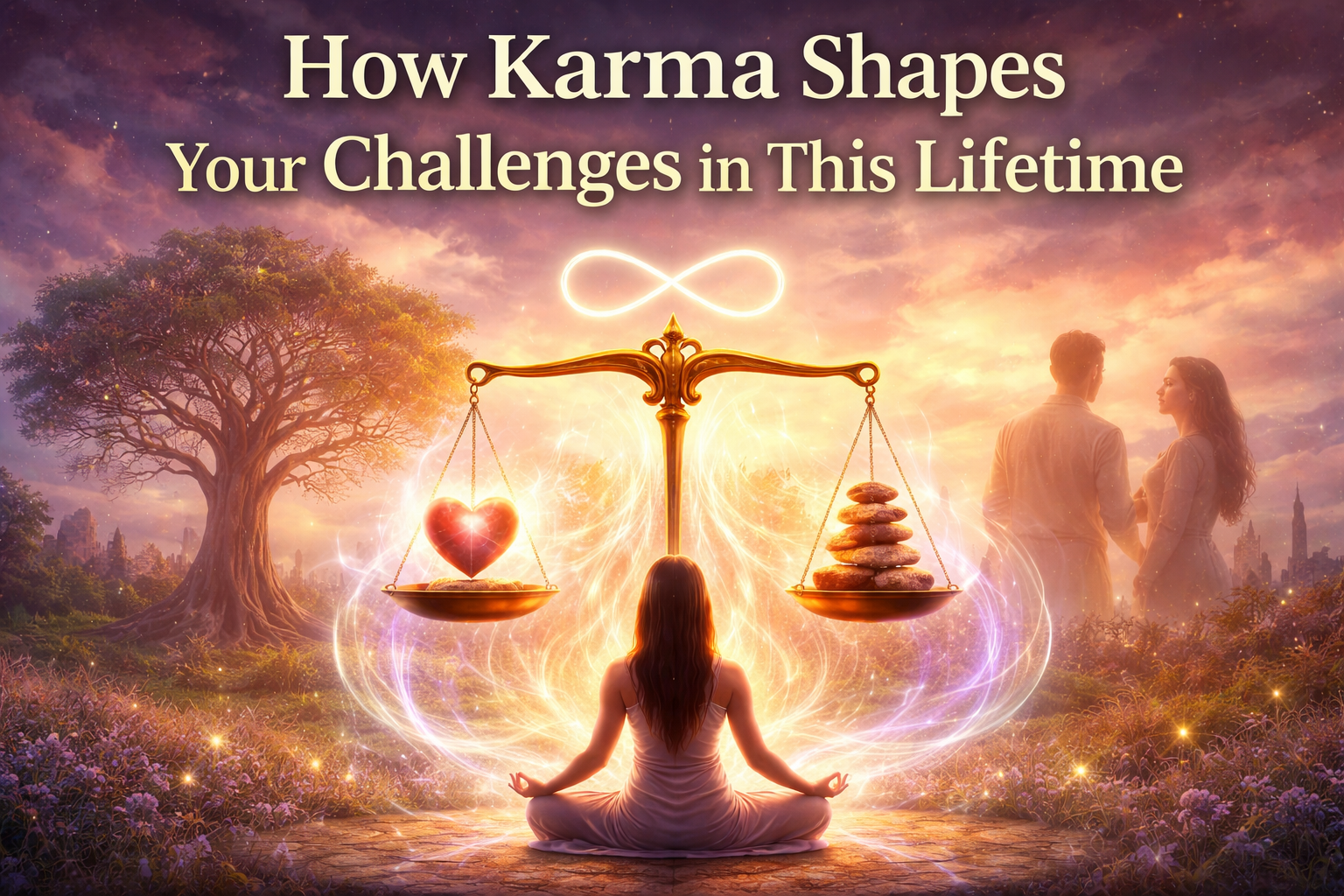
  • How Karma Shapes Your Challenges in This Lifetime

    How Karma Shapes Your Challenges in This Lifetime

    Many people wonder why certain struggles seem to repeat themselves—difficult relationships, financial blocks, emotional patterns, or unexplained fears. In spiritual traditions and modern metaphysical thought, these recurring challenges are often explained through the concept of karma in this lifetime.

    Karma is not about punishment or reward. Instead, it’s about cause and effect—how past actions, intentions, and lessons influence present experiences. Understanding how karma shapes your challenges can help you break cycles, heal patterns, and move forward with clarity.


    What Is Karma in This Lifetime?

    Karma in this lifetime refers to the energetic consequences of actions, thoughts, and choices both from earlier stages of this life and, according to many belief systems, from previous lifetimes.

    Rather than something mystical or fatalistic, karma is often described as:

    • A learning mechanism
    • A mirror for growth
    • A way the soul evolves through experience

    Challenges appear not to punish, but to highlight unresolved lessons that need awareness and healing.


    How Karma Creates Repeating Life Challenges

    One of the clearest signs of karma in this lifetime is repetition. When similar struggles keep appearing, it’s often because the underlying lesson hasn’t been fully integrated.

    Common karmic patterns include:

    • Repeated relationship conflicts
    • Financial instability despite effort
    • Emotional triggers that feel disproportionate
    • Fear without a clear cause
    • Being drawn to the same type of people or situations

    These experiences aren’t random. They are opportunities to respond differently, make conscious choices, and grow beyond old patterns.


    Karmic Lessons vs. Life Obstacles

    Not every difficulty is karmic. Some challenges are simply part of being human. Karmic challenges, however, usually have distinct traits:

    Signs a challenge is karmic:

    • It feels deeply familiar or emotionally charged
    • Logic alone doesn’t explain it
    • You’ve “worked on it” but it keeps returning
    • It pushes you toward inner growth, not avoidance

    When a challenge carries emotional weight or spiritual significance, it often points to karma in this lifetime seeking resolution.


    The Role of Personal Responsibility in Karma

    A key aspect of karma is personal responsibility—not blame, but awareness.

    Karma doesn’t mean:

    • You deserve suffering
    • You are stuck forever
    • You must “pay” for past mistakes

    It means you have the power to change outcomes by changing awareness, behavior, and intention.

    When you respond consciously instead of reacting automatically, karmic cycles begin to loosen.


    How Karma Shows Up in Relationships

    Relationships are one of the most common places karma appears. Many people experience karmic relationships that feel intense, complicated, or transformative.

    Karmic relationship challenges may include:

    • Strong emotional attachment
    • Repeated misunderstandings
    • Power imbalances
    • Difficulty letting go

    These relationships exist to teach lessons such as:

    • Boundaries
    • Self-worth
    • Compassion
    • Emotional maturity

    Once the lesson is learned, the relationship often changes—or naturally ends.


    Karma and Emotional Patterns

    Emotional reactions can also reveal karma in this lifetime. If certain situations trigger fear, anger, or sadness far beyond what seems reasonable, the root may be karmic.

    Examples include:

    • Fear of abandonment
    • Deep trust issues
    • Guilt without cause
    • Chronic self-doubt

    These emotions may stem from unresolved experiences stored in subconscious memory. Healing begins when emotions are observed rather than suppressed.


    Can Karma Be Healed or Changed?

    Yes. Karma is not permanent.

    Karma evolves when:

    • Awareness replaces unconscious behavior
    • Compassion replaces judgment
    • Choice replaces habit

    Healing karma does not require suffering. It requires understanding.


    Practical Ways to Work With Karma in This Lifetime

    You don’t need extreme rituals or beliefs to work with karma. Simple, consistent practices are often the most effective.

    1. Self-Reflection

    Ask yourself:

    • “What lesson keeps repeating here?”
    • “What am I avoiding or resisting?”

    2. Conscious Choices

    When familiar patterns appear, pause before reacting. Even small changes weaken karmic loops.

    3. Meditation and Awareness

    Meditation helps surface subconscious patterns tied to karma in this lifetime. Awareness itself begins the healing process.

    4. Forgiveness

    Forgiving yourself and others releases emotional energy tied to past actions—one of the fastest ways to shift karma.

    5. Intentional Living

    Act with clarity and integrity. Karma responds not just to actions, but to intentions.


    Karma Is About Growth, Not Punishment

    One of the biggest misconceptions is that karma is something to fear. In reality, karma exists to help the soul evolve.

    Challenges are not signs of failure—they are signs of opportunity.

    When you understand how karma shapes your challenges, you gain:

    • Greater emotional clarity
    • A sense of purpose
    • Empowerment over life patterns
    • Deeper self-awareness

    Final Thoughts: Understanding Karma in This Lifetime

    Karma in this lifetime is not about the past controlling you—it’s about the present inviting growth.

    Every challenge carries insight. Every repeated pattern carries a lesson. When you meet life with awareness instead of resistance, karma transforms from a burden into a guide.

    By recognizing patterns, responding consciously, and choosing growth, you move from being shaped by karma to shaping your future.

  • Past Life Memories: Why They Feel So Real and What They Mean

    Past Life Memories: Why They Feel So Real and What They Mean

    Many people experience memories that don’t seem to belong to their current life. These moments can appear as vivid dreams, emotional reactions, unexplained fears, or a deep sense of familiarity with places and people they have never encountered before. These experiences are often described as past life memories.

    While mainstream science continues to explore how memory and consciousness work, spiritual traditions, psychology, and modern case studies suggest that past life memories may carry deeper meaning. In this article, we’ll explore why past life memories feel so real, how they appear, and what they may reveal about your soul’s journey.


    What Are Past Life Memories?

    Past life memories are impressions, emotions, images, or sensations that seem to originate from a time before your current lifetime. Unlike imagination, these memories often feel unexpected, emotionally intense, and highly detailed.

    They may surface as:

    • Sudden mental images
    • Strong emotional reactions without a clear cause
    • Recurring dreams of another era
    • Unexplained skills, fears, or preferences
    • A sense of “knowing” something you never learned

    Many people report these memories during meditation, dreams, or moments of emotional vulnerability.


    Why Do Past Life Memories Feel So Real?

    One of the most common questions people ask is why these memories feel more vivid than normal thoughts or dreams. There are several possible explanations.

    Emotional Memory Is Stronger Than Logical Memory

    Emotions are stored deeply in the subconscious mind. If a memory is tied to fear, love, loss, or trauma, it can feel extremely real—even if the conscious mind doesn’t recognize its origin.

    The Subconscious Mind Doesn’t Track Time

    Your subconscious mind doesn’t distinguish between “past” and “present” the way your logical mind does. When a memory resurfaces, it may feel like it’s happening now.

    Sensory Details Increase Realism

    Many past life memories include sensory details such as:

    • Sounds
    • Smells
    • Clothing textures
    • Landscapes or architecture

    These details give the experience a strong sense of realism, making it difficult to dismiss as imagination.


    Common Signs of Past Life Memories

    Not everyone experiences past life memories the same way. Below are some of the most common signs.

    Recurring Dreams of Another Time

    Dreams set in unfamiliar historical periods, foreign locations, or involving unknown people may be a sign of soul memory resurfacing.

    Unexplained Emotional Triggers

    Sudden fear, sadness, or comfort in specific situations without a logical cause can point to unresolved past experiences.

    Instant Familiarity With Places or Cultures

    Feeling “at home” in a country you’ve never visited or deeply connected to a culture you were never raised in is a widely reported sign.

    Natural Talents Without Training

    Some people display strong skills such as music, languages, or craftsmanship without formal learning.


    Are Past Life Memories Scientifically Explained?

    From a scientific perspective, past life memories are often explained through psychology and neuroscience. Possible interpretations include:

    • Subconscious imagination
    • Cryptomnesia (forgotten information resurfacing)
    • Emotional pattern recognition
    • Symbolic memory processing

    However, research into childhood past life recall—especially cases studied by psychiatrists—has shown instances where children recalled verifiable historical details they were unlikely to have learned naturally.

    Science may not fully explain past life memories yet, but it does acknowledge that human memory and consciousness are not fully understood.


    Spiritual Meaning of Past Life Memories

    From a spiritual perspective, past life memories are believed to surface for a reason. They may appear to help you:

    Heal Unresolved Karma

    Memories connected to trauma or emotional pain may surface to be acknowledged and released.

    Understand Repeating Life Patterns

    Recurring relationship challenges or fears may originate from lessons carried over from another lifetime.

    Reconnect With Soul Purpose

    Memories of skills, callings, or roles from another life may guide your current life direction.


    Can Past Life Memories Affect This Lifetime?

    Yes, many spiritual traditions believe past life memories influence current experiences, including:

    • Relationship dynamics
    • Emotional patterns
    • Career choices
    • Fears and phobias
    • Core beliefs about self-worth

    Recognizing these influences can lead to greater self-awareness and emotional healing.


    How to Safely Explore Past Life Memories

    If you’re curious about exploring past life memories, it’s important to approach the process gently.

    Meditation and Reflection

    Quiet meditation can allow subconscious memories to surface naturally without force.

    Journaling Experiences

    Writing down dreams, emotions, or sudden insights helps identify patterns over time.

    Guided Past Life Readings

    Many people begin with gentle, reflective readings designed to explore symbolic soul patterns rather than literal events.

    You can explore this topic further through our free past life reading, designed to help you reflect on recurring soul themes and emotional patterns.


    Should You Trust Past Life Memories?

    It’s healthy to remain open yet grounded. Past life memories don’t need to be taken literally to be meaningful. Whether symbolic or experiential, what matters most is how they help you grow, heal, and understand yourself better.

    Instead of asking, “Is this memory real?”, a more helpful question is:
    “What is this experience trying to teach me?”


    Final Thoughts

    Past life memories feel real because they touch deep layers of emotion, identity, and subconscious awareness. Whether viewed through a spiritual or psychological lens, these memories often surface to guide healing, understanding, and personal growth.

    By observing them with curiosity rather than fear, you can uncover powerful insights about who you are—and why certain patterns repeat in your life.

  • Signs You Lived a Past Life (10 Powerful Clues You Shouldn’t Ignore)

    Signs You Lived a Past Life (10 Powerful Clues You Shouldn’t Ignore)

    Have you ever feel a deep curiosity about the signs you lived a past life? Some experience emotions, dreams, or memories that don’t seem to belong to this lifetime. While science continues to explore consciousness, millions of people worldwide believe that past life experiences can leave subtle but meaningful signs.

    If you’ve ever wondered, “Have I lived a past life?”, these clues may help you explore that possibility in a grounded and thoughtful way.


    What Does It Mean to Have Lived a Past Life?

    The concept of reincarnation suggests that the soul may experience multiple lifetimes, learning and evolving through each one. Across spiritual traditions, people report memories, emotional patterns, and unexplained connections that feel older than their current life.

    While not everyone accepts reincarnation, many people find personal meaning in exploring these experiences as a way to better understand themselves.


    10 Signs You May Have Lived a Past Life

    1. Strong Déjà Vu Experiences

    If you frequently feel like you’ve been somewhere before — even when visiting a place for the first time — it may be more than coincidence. Some believe déjà vu is linked to past life memories resurfacing.


    2. Unexplained Fears or Phobias

    Certain fears, like fear of water, heights, or fire, sometimes appear without any traumatic event in this lifetime. Some spiritual traditions suggest these could be emotional imprints from a previous life experience.


    3. Emotional Connections to Certain Cultures or Eras

    Do you feel deeply drawn to a specific country, time period, or historical culture for no clear reason? This emotional pull may reflect a subconscious connection to a past life setting.


    4. Recurring Dreams of Another Time or Place

    Dreams that feel unusually vivid — especially ones involving old cities, unfamiliar languages, or historical clothing — are often reported by people exploring past life themes.


    5. Natural Talents You Never Learned

    Some people show strong skills (like music, art, or languages) without formal training. While talent can be explained naturally, some believe these abilities may reflect experiences from a previous lifetime.


    6. Deep Soul Recognition with Certain People

    Meeting someone and feeling an instant, deep familiarity is commonly described as a soul connection. Some interpret this as having shared a past life together.


    7. Strong Emotional Reactions Without Clear Cause

    Intense emotions that arise suddenly — sadness, nostalgia, or comfort — in certain situations may point to unresolved emotional patterns carried over from another lifetime.


    8. Feeling Older Than Your Actual Age

    Many people who explore reincarnation say they’ve always felt “older” than their years, as if they’ve already lived a full life before.


    9. Fascination With Death and the Afterlife

    A deep, lifelong interest in what happens after death can sometimes be linked to a soul that feels familiar with the cycle of life and rebirth.


    10. Intuitive Knowing That You’ve Been Here Before

    Some people simply know. While intuition is personal, this inner certainty is often what leads people to explore past life readings and spiritual tools.


    How to Explore Your Past Life Safely and Thoughtfully

    If you’re curious, there are gentle ways to explore past life themes:

    Meditation and Reflection

    Guided meditation can help quiet the mind and bring subconscious impressions to the surface.

    Journaling Dreams and Emotions

    Writing down dreams, strong feelings, and repeated patterns can reveal meaningful themes over time.

    Past Life Readings

    Some people use intuitive tools, hypnosis, or symbolic readings to explore possible past life connections.

    You may also explore our free past life reading tool to reflect on possible soul patterns and spiritual themes connected to your journey.


    A Grounded Perspective on Past Lives

    It’s important to approach past life exploration with balance. Whether you view these signs as spiritual, psychological, or symbolic, they can still offer valuable insight into your emotions, fears, strengths, and relationships.

    Even without literal reincarnation, exploring these patterns can help you understand yourself on a deeper level.


    Final Thoughts

    Wondering if you lived a past life is a deeply human question. These signs aren’t proof — but they can be meaningful signals that invite reflection, healing, and personal growth.

    If you resonate with several of these clues, you may be at the beginning of a powerful journey of self-discovery.


  • Signs You Lived a Past Life: 15 Deep Clues Your Soul May Remember

    Signs You Lived a Past Life: 15 Deep Clues Your Soul May Remember

    Have you ever felt an unexplainable connection to a place you’ve never visited, or an intense fear with no clear cause? Many people experience emotions, talents, or memories that don’t seem to originate from this lifetime alone.

    Across spiritual traditions, psychology, and cultural history, these experiences are often referred to as signs you lived a past life and signs of past life memories.

    This guide explores the most common signs you may have lived a past life, explained in a grounded, thoughtful way—without exaggeration or fear-based claims.


    What Does It Mean to Have Lived a Past Life?

    The concept of past lives, also known as reincarnation, suggests that consciousness or soul energy may continue beyond a single lifetime. According to this belief, experiences from previous lives can leave subtle impressions that influence emotions, behaviors, fears, or talents today.

    Whether you see this through a spiritual lens or as symbolic memory stored in the subconscious, many people report similar patterns.


    15 Signs You Lived a Past Life

    1. Strong Emotional Reactions Without a Clear Reason

    If certain situations trigger intense emotions—fear, sadness, nostalgia—without any personal history to explain them, this may indicate unresolved emotional memory.

    These reactions often appear suddenly and feel deeper than normal emotional responses.


    2. Feeling Drawn to a Specific Era or Culture

    A deep fascination with a particular historical period, language, or culture—especially one unrelated to your upbringing—can be a common sign people report.

    This goes beyond casual interest and feels emotionally personal.


    3. Recurring Dreams That Feel Like Memories

    Some people experience vivid, repeating dreams involving unfamiliar places, people, or events that feel experienced rather than imagined.

    These dreams may:

    • Repeat over years
    • Feel emotionally intense
    • Leave a lingering sense of familiarity

    4. Unexplained Fears or Phobias

    Certain phobias—such as fear of water, heights, fire, or specific objects—sometimes appear without a known traumatic event in this lifetime.

    In spiritual interpretation, these fears may reflect unresolved experiences carried at a subconscious level.


    5. Natural Talents You Never Learned

    Have you ever shown an ability—music, art, healing, leadership—without formal training?

    While natural talent has many explanations, past life believers see this as skill memory carried forward.


    6. A Sense of “Knowing” You Can’t Explain

    This can appear as:

    • Strong intuition
    • Immediate recognition of people or places
    • Inner certainty without logical reasoning

    It often feels calm and familiar rather than dramatic.


    7. Feeling Older Than Your Age

    Many people who explore past life concepts describe feeling emotionally or spiritually older than their peers, even as children.

    This may show up as:

    • Early maturity
    • Deep empathy
    • Preference for solitude or reflection

    8. Deep Soul Connections With Certain People

    Instant, intense connections—positive or challenging—can feel different from ordinary relationships.

    These connections often involve:

    • Immediate trust or tension
    • Strong emotional pull
    • A sense of unfinished business

    9. Emotional Reactions to Certain Places

    Visiting or even seeing photos of certain locations may cause unexpected emotions—peace, sadness, excitement—without logical explanation.

    This reaction often feels personal and intimate.


    10. Repeating Life Patterns

    If you notice recurring themes in your life—relationships, struggles, or roles—you may feel as if you’re “relearning” something.

    Some spiritual interpretations suggest this reflects lessons carried forward for growth.


    11. Unexplained Physical Marks or Sensations

    Some people associate birthmarks or recurring physical sensations with symbolic memories. While science offers many explanations, spiritual traditions often view the body as a record of energetic experience.


    12. A Strong Pull Toward Spiritual Topics Early in Life

    Interest in spirituality, meditation, or metaphysical topics at a young age—without outside influence—is commonly reported by people exploring past life concepts.


    13. Feeling Out of Place in the World

    A subtle sense of not fully belonging despite having a normal life can sometimes be described as soul disconnection or searching for familiarity.


    14. Intense Emotional Response to Certain Music or Sounds

    Some people experience overwhelming emotion when hearing specific instruments, chants, or melodies, even if they’ve never encountered them before.


    15. Curiosity About Past Life Readings or Regression

    A strong pull toward past life exploration itself—without external pressure—can indicate inner curiosity driven by subconscious memory.


    How to Explore Past Life Signs Safely

    If you resonate with several signs, gentle exploration is key.

    You can try:

    • Journaling recurring dreams or emotions
    • Meditation focused on self-awareness
    • Reflective past life reading tools (non-invasive)
    • Speaking with grounded spiritual practitioners

    Avoid approaches that promise instant answers or guaranteed results.


    Are Past Life Signs Scientifically Proven?

    There is no scientific consensus confirming past lives. Psychology often explains these experiences through memory, symbolism, intuition, or emotional patterning.

    Both perspectives can coexist what matters most is personal insight, not belief pressure.


    Final Thoughts

    Experiencing signs of a past life doesn’t mean something is “wrong” or mystical by default. Many people simply use these reflections as a way to understand themselves more deeply.

    Whether viewed spiritually or symbolically, these signs can offer:

    • Emotional clarity
    • Self-awareness
    • A sense of meaning

    If you’re curious, approach the journey with curiosity not fear.


  • Past Life Dreams Meaning: What Your Soul May Be Trying to Tell You

    Past Life Dreams Meaning: What Your Soul May Be Trying to Tell You

    Have you ever woken from a dream that felt too real to ignore—one where you lived another life, walked through unfamiliar places, or felt emotions that stayed with you all day?
    Understanding the past life dreams meaning can help you uncover deeper insights about your subconscious, emotional patterns, and spiritual journey.

    This article explores past life dreams in a grounded, thoughtful, and user-friendly way, without exaggeration or fear-based claims.


    What Are Past Life Dreams?

    Past life dreams are vivid dream experiences that feel different from ordinary dreams. They often include:

    • A strong sense of realism
    • Clear storylines or timelines
    • Intense emotions
    • A feeling of “remembering,” not imagining

    Many people interpret these dreams as symbolic reflections of soul memory, subconscious awareness, or unresolved emotional patterns.


    Why Do Past Life Dreams Feel So Real?

    Unlike random dreams, past life dreams often:

    • Repeat over time
    • Feel emotionally charged
    • Leave a lasting impression
    • Appear during periods of self-growth

    From a psychological and spiritual perspective, these dreams may surface when the mind is relaxed and open, allowing deeper layers of memory and symbolism to emerge.


    Common Types of Past Life Dreams and Their Meaning

    1. Dreams Set in Another Time Period

    If you dream of living in a different historical era—wearing unfamiliar clothing or using old tools—it may symbolize:

    • A connection to certain values or struggles
    • Lessons related to survival, leadership, or sacrifice
    • Emotional themes still relevant today

    2. Dreams of Unfamiliar Places

    Dreaming of places you’ve never visited but feel deeply connected to can reflect:

    • Subconscious curiosity
    • Emotional memory patterns
    • A symbolic “home” the soul recognizes

    These dreams are often linked to identity and belonging.


    3. Recurring Dreams With the Same Story

    Repeating dreams involving the same characters or events may point to:

    • Unresolved emotional lessons
    • Patterns your mind is asking you to reflect on
    • Experiences seeking understanding or closure

    4. Dreams Involving Strong Emotions

    Intense fear, love, grief, or joy in a dream may indicate emotional memories that need attention.

    Rather than literal past events, these dreams often highlight emotional truths that still influence your current life.


    Are Past Life Dreams Literal or Symbolic?

    This is an important question.

    Most spiritual teachers agree that past life dreams are symbolic experiences, not factual memories. Their value lies in:

    • Emotional insight
    • Self-reflection
    • Awareness of repeating life patterns

    What matters is how the dream resonates with you, not proving its origin.


    How to Interpret the Meaning of Past Life Dreams

    1. Focus on Emotions, Not Details

    Ask yourself:

    • How did the dream make me feel?
    • Do these emotions appear in my waking life?

    2. Look for Repeating Themes

    Themes like loss, courage, betrayal, or responsibility often reflect current life lessons.


    3. Keep a Dream Journal

    Writing down dreams helps identify patterns and meanings over time.


    4. Stay Grounded

    Healthy interpretation avoids obsession or fear. Dreams are tools for insight—not predictions.


    Past Life Dreams and Emotional Healing

    Many people find that reflecting on past life dreams helps them:

    • Understand unexplained fears
    • Improve relationships
    • Release emotional blocks
    • Feel more at peace

    These dreams can act as a mirror, showing areas where growth or healing is needed.


    Should You Explore Past Life Dreams Further?

    If past life dreams feel meaningful to you:

    • Meditation can help deepen awareness
    • Journaling builds clarity
    • A free past life reading may offer symbolic guidance

    Always approach exploration with balance and self-care.


    Final Thoughts

    The meaning of past life dreams isn’t about proving who you were it’s about understanding who you are now.

    When explored gently and thoughtfully, these dreams can become powerful tools for self-reflection, emotional healing, and spiritual growth.

    Trust your intuition, stay grounded, and let insight unfold naturally.

  • Reincarnation Cases Science Can’t Fully Explain | Past Life Evidence

    Reincarnation Cases Science Can’t Fully Explain | Past Life Evidence

    Across cultures and centuries, people have reported strange memories, birthmarks, dreams, and knowledge that seem to come from another lifetime. While mainstream science remains cautious, there are documented cases that continue to intrigue researchers and challenge our understanding of memory and consciousness.

    In this article, we’ll explore some of the most compelling reincarnation cases that science can’t fully explain, what researchers have found, and what these stories might mean for our view of life, identity, and consciousness.


    Why Some Reincarnation Cases Defy Scientific Explanation

    Reincarnation research often focuses on children who spontaneously report memories of past lives — details they couldn’t have learned through ordinary means. Psychologists, parapsychologists, and researchers like Dr. Ian Stevenson and Dr. Jim Tucker have studied thousands of these cases over decades. PR Sarkar Institute+1

    These researchers developed criteria to assess such cases, including:

    • Specific details about former lives
    • Lack of prior access to the information
    • Verifiable connections to real historical individuals or places
    • Behavioral traits matching claimed past-life personalities www1.nebraskafood.org

    When these criteria are met, the cases are difficult to dismiss as imagination or coincidence.


    Famous Reincarnation Cases That Still Puzzle Science

    Shanti Devi — Childhood Memories Verified

    One of the earliest and most documented cases is Shanti Devi, who at age four began describing a past life in a city she had never visited. She provided detailed information about her “former husband,” the town he lived in, and family events. Investigators later confirmed many of her statements as matching a real woman named Lugdi Devi who died years earlier. Wikipedia

    This case attracted the attention of researchers and Indian public figures, including Mahatma Gandhi, and remains a cornerstone in the study of reincarnation experiences.


    James Leininger — WWII Past Life Memories

    James Leininger began describing detailed memories of being a World War II pilot when he was just a toddler. He spoke of specific aircraft names, events, and locations that he could not have learned from books, family, or common media — yet were verified as real. Bustle

    This case is often cited to illustrate how children’s past-life memories sometimes match verifiable history.


    Purnima Ekanayake — Sri Lankan Case (Birthmarks & Recognition)

    Purnima, a young Sri Lankan girl, recalled specific details of a past life, including intimate knowledge of locations and family members she had never met. In some documented examples, children also exhibit birthmarks corresponding to fatal wounds their claimed past-life identity had suffered, adding a physical dimension to their memories. thegodlie.com

    These physical markers add another layer of mystery for scientists trying to understand consciousness and memory.


    Scientific Perspectives and Skeptical Views

    While these stories are fascinating, scientists emphasize caution. Alternative explanations include:

    • Cryptomnesia: unconscious recall of information previously learned but forgotten, resurfacing as “new memories.” Transpersonal Psychology
    • Fantasy proneness: highly imaginative individuals may create vivid narratives that feel real. Transpersonal Psychology
    • Cultural influence: belief systems in some societies may shape how memories are interpreted or reported. spr.ac.uk

    None of these fully account for cases where verifiable details emerge, but they remind us that reincarnation research exists on the edge of scientific inquiry and mystery.


    Why These Cases Matter

    These reincarnation cases aren’t just anecdotes — they raise meaningful questions about:

    • What consciousness truly is
    • Whether memory can transcend a single lifetime
    • How early childhood experiences may connect with deeper identity
    • The limits of scientific methods in studying human experience

    While science hasn’t proven reincarnation, these stories continue to challenge assumptions and expand inquiry into human awareness.


    Final Thoughts — The Mystery Continues

    Reincarnation cases that science can’t explain don’t require belief or skepticism as absolutes — they invite curiosity. Whether you view them as spiritual phenomena, psychological puzzles, or something in between, they reveal the incredible complexity of our inner lives and human consciousness.

    ✨ Curious about what your own soul might remember?
    Try a Free Past Life Reading to explore your past life energy and patterns today.

  • Reincarnation stories that science can’t explain

    Reincarnation stories that science can’t explain

    Reincarnation: An introduction

    Have you ever had a strange feeling of connection to a place or time you’ve not been? Perhaps you have met someone whose life story seems eerily similar? Reincarnation could be the cause of this sense of déjà vu. Tales of past life have captured our imaginations across cultures and generations and sparked many debates. Reincarnation stories that science can’t explain are more than just folklore. They challenge our perceptions of death and life, and invite us to explore the mysteries beyond the veil.
    These narratives, which range from children describing vivid details of their past lives to adults describing experiences that are beyond logic, arouse curiosity and skepticism. What if memories could be accessed from a previous life? What is the science behind this phenomenon? We’ll explore some fascinating reincarnation tales that will make even the most sceptical of people question their beliefs.

    The mystery of past-life memories

    The past life memories are a fascinating mystery. Children will often recall vivid details of past lives. The accounts often include names, events, and places that are too specific to be a mere imagination.

    These children often show knowledge that is beyond their age. Sometimes they recognize relatives or remember experiences from a long time ago. These instances are intriguing and raise questions about memory.

    Researchers believe that these memories may be linked to genetic memory or collective awareness. Some researchers believe they could be a result of dreams or subconscious memories rather than past lives.

    The stories are captivating, regardless of how they are interpreted. The stories challenge our perception of time and reality, while also inviting us to consider the possibility that existence is not linear but cyclical. Each story adds a new layer to the intriguing mystery that is waiting to be solved.

    Reincarnation: Scientific theories

    Reincarnation theories often walk a thin line between skepticism, and curiosity. Researchers have explored consciousness beyond the physical world, suggesting that it could transcend the brain. This idea challenges conventional neuroscience.

    Quantum consciousness is a popular theory. It was developed by Roger Penrose and other physicists. Could memories or souls be outside the body if true?

    Genetics and hereditary characteristics are another angle. Scientists have discovered fascinating connections between past life and traits that seem to be carried over from previous lives.

    The psychology plays an important role in understanding this phenomenon. Carl Jung’s concept of collective unconsciousness suggests that people share experiences from generation to generation, which could be a way to recognize past lives.

    These scientific inquiries, while lacking in empirical proof, open fascinating doors for reincarnation stories.

    Reincarnation Stories from Around the World

    Stories of reincarnation are found in cultures across the globe, with each continent having its own unique beliefs. Children in India often recall vivid details from previous lives and identify family members that they have never met. The community takes these accounts seriously.

    In Tibet, tulkus are identified by specific behaviors or signs. This tradition, which has been passed down for centuries, continues to influence Tibetan Buddhism.

    In Brazil and around the world, many people report past lives which have shaped their current identities. These narratives are often interwoven with Brazilian folklore and spiritual practices.

    In Western societies too, there are reports that appear from time to time. People claim to have connections with historical figures or events. These diverse anecdotes are a challenge to our understanding of life after death and spark curiosity in people from all over the world.

    Case studies of children with past-life memories

    Children are often the best witnesses to reincarnation. Parents and researchers can be baffled by their vivid memories.

    A boy from Louisiana named James Leininger is a famous case. He began talking about his experiences as a World War II fighter pilot at the age of two. He gave specific details such as his aircraft carrier’s name and the circumstances of his death. His family was amazed at how accurately he described things he had never experienced before.

    In India, many children have also reported their past lives in astonishing detail. They recall names of relatives or places that they have never been to but feel an inexplicable connection with them.

    These stories are not just entertaining; they also challenge our understandings of memory and consciousness. Their accounts are fascinating, but so is what they might reveal about a life beyond our own.

    Debunking skepticism, criticism and skepticism

    Skepticism about reincarnation, which is often rooted in scientific rationalism, is very common. Critics claim that memories of past lives may be fabricated or the result of imagination. They attribute these beliefs to culture and upbringing.

    Yet, many cases defy simple explanations. Children recall details that they could not possibly remember, such as names, places or events from a long time ago. These examples challenge the idea that all experiences are solely shaped by their environment.

    Psychologists believe cognitive biases could play a part in our interpretation of these phenomena. Numerous documented accounts persist, despite thorough scrutiny.

    Skeptics often ignore personal testimony from people who have vivid memories themselves. These stories are not easily dismissed as a coincidence or fantasy.

    The debate continues to be vibrant and unresolved, a compelling intersection between belief and inquiry which invites deeper exploration of human experience.

    Conclusion: The unexplainable phenomenon of reincarnation

    Stories of reincarnation offer a fascinating look into the mysteries surrounding life and death. These stories challenge our perception of life and death and push the boundaries of science, spirituality and personal experience. These stories are full of detail and emotion. They often leave those who listen to them wondering about their own beliefs on life after death.

    This discussion is made more interesting by the phenomenon of children’s past-life memories. They recount vivid experiences that are not merely imagination. They often include specific details of people or places that they could not possibly have known–yet do.

    Skepticism is a common response to such stories, and many attribute them to psychological or coincidental factors. For every skeptic there are those who are captivated with these stories that defy all conventional explanations.

    While some aspects of reincarnation can be studied through research methods such as regression therapy or case study, others are elusive. This mystery is what keeps us interested in discovering what lies beyond the current understanding of reality.

    Reincarnation is a phenomenon that has captivated people for many years, not just because it’s mysterious but also because the questions raised about consciousness and identity are profound. It’s up to each individual whether they believe reincarnation is true or not. But there’s no doubt that it has a profound impact on anyone who explores these fascinating stories.

  • How Karma Influences Life Challenges

    How Karma Influences Life Challenges

    Karma is one of the most widely discussed spiritual concepts, yet it’s also one of the most misunderstood. Many people believe karma is simply “good or bad luck,” but in deeper spiritual traditions, karma represents the energetic lessons, unfinished patterns, and soul agreements we carry from one lifetime into the next.

    Understanding how How Karma Influences Life Challenges can help you make wiser decisions, recognize repeating patterns, and heal obstacles that feel “unexplainable.”

    In this article, you’ll learn how karmic energy shapes your struggles, relationships, opportunities, and emotional challenges—and how you can transform karma into growth.


    What Exactly Is Karma? (A Clear, Modern Explanation)

    Karma is the energy of cause and effect, shaped by your actions, choices, thoughts, and intentions—across all lifetimes.
    It is not punishment; it is correction, learning, and balancing.

    How Karma Carries Into Your Current Life

    Spiritual teachings describe karma as a “soul memory.”
    Examples include:

    • A fear or phobia with no logical origin
    • A repeated relationship pattern
    • A challenge that appears again and again
    • A natural talent you were “born with”
    • A connection with someone that feels ancient

    These are often signs of unfinished karmic cycles.


    Signs You Are Experiencing Karmic Challenges

    Karmic challenges often feel intense because they are meant to push your soul toward growth. Common signs include:

    1. Recurring Problems in the Same Area of Life

    For example:

    • Money problems repeating for years
    • Constant struggles with trust
    • Always choosing similar partners
    • Friendships that end the same way

    These cycles indicate karmic lessons in progress.

    2. Emotional Triggers That Feel “Too Strong”

    Karmic wounds often sit deeply in the subconscious.
    If something affects you more intensely than expected, it may be tied to past-life emotional memory.

    3. Meeting People Who Feel “Destined”

    Sudden soul connections—both positive and negative—can be karmic relationships meant to teach or heal something.

    4. Feeling Blocked or Stuck Without a Clear Reason

    Karmic energy sometimes acts like an invisible barrier until a lesson is acknowledged.


    Types of Karma That Shape Your Current Challenges

    Not all karma is heavy. Many types of karma are blessings too.

    1. Personal Karma

    Lessons from your actions in past lives that shape your current growth.

    2. Karmic Relationships

    Family, lovers, and friendships that carry lessons of healing, forgiveness, or closure.

    3. Karmic Opportunities

    Positive rewards you earned from previous lifetimes—
    such as skills, intuition, success, or inner wisdom.

    4. Collective Karma

    Challenges tied to the family or community you were born into.


    How Karma Influences Modern Life Challenges

    Here are real examples of how karmic patterns appear in everyday life:

    Financial Struggles

    A soul may be learning lessons of responsibility, discipline, or value.

    Relationship Problems

    Repeating heartbreaks or emotionally unavailable partners may reflect past-life trust or abandonment wounds.

    Fear & Anxiety Without Reason

    Often linked to energetic memories of trauma or loss.

    Health Challenges

    Spiritual psychology suggests some health patterns connect to emotional karma or ancestral energy.


    Can Karma Be Changed? Yes — Here’s How to Transform It

    Karma is not fixed. It’s flexible and constantly evolving.

    1. Awareness Is the First Step

    Identify what keeps repeating.
    Ask: “What is this trying to teach me?”

    2. Break Emotional Patterns

    Healing trauma, setting boundaries, and practicing self-awareness weakens karmic cycles.

    3. Forgiveness Work

    Forgiving others—and yourself—is the fastest way to dissolve negative karma.

    4. Meditation & Past-Life Exploration

    These techniques help you uncover the root of karmic patterns and release old energy.

    5. Choose Different Actions

    Karma changes when behavior changes.
    Every better choice creates new, positive energy.


    Why Understanding Karma Helps You Grow Spiritually

    When you understand your karmic lessons, you gain:

    • Emotional clarity
    • Stronger intuition
    • Better decision-making
    • Healthier relationships
    • A deeper sense of purpose
    • Inner peace

    Karma isn’t about suffering—
    it’s about evolving into the highest version of yourself.


    Final Thoughts — Karma Is Not a Burden, It’s a Pathway to Transformation

    Your lifetime challenges are not random.
    They are invitations to grow, heal, and rise above past cycles.

    When you learn to interpret your karmic lessons, you unlock self-understanding at a soul level—and life becomes more aligned, meaningful, and peaceful.